
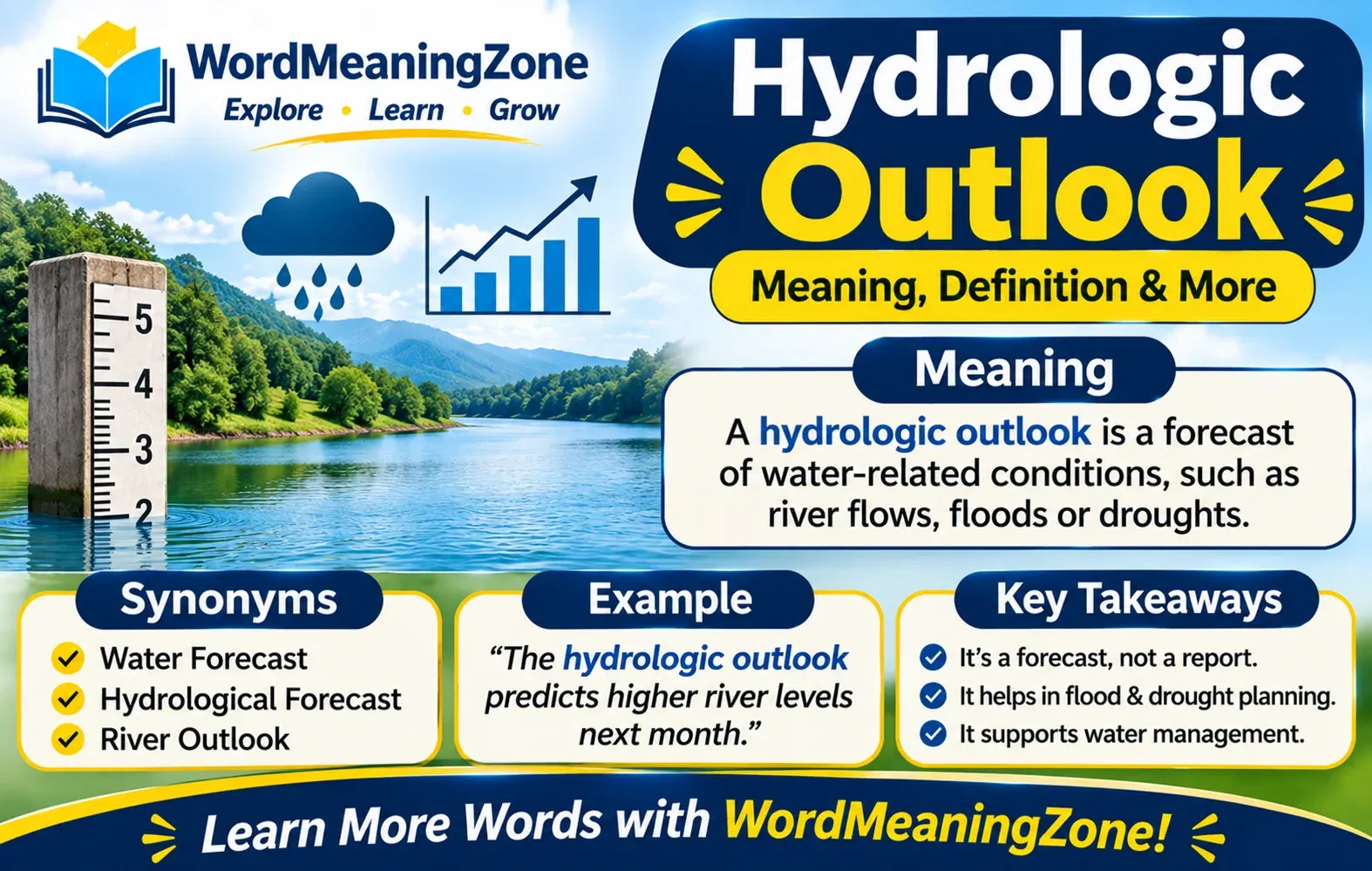
Hydrologic Outlook Meaning
A hydrologic outlook is an early heads-up from the National Weather Service (NWS) that flooding or other water problems may develop. It is not a watch or a warning. Definitions below were checked against NWS pages on November 27, 2026.
Quick Facts
| Quick Fact | Answer |
|---|---|
| Who issues it? | Local NWS Weather Forecast Offices |
| What does it say? | Flooding or water issues may develop |
| Is flooding happening now? | Not necessarily |
| NWS message level | “Be Aware” |
| Should you evacuate? | Not because of an outlook alone. Follow local officials. |
Hydrologic Outlook Meaning in Weather
“Hydrologic” means related to water: rain, rivers, snowmelt, reservoirs and soil moisture. An “outlook” means something may happen. Put together, a hydrologic outlook tells you that a water-related hazard, usually flooding, could develop.
The NWS says outlook products are issued days, weeks or even months ahead. It describes an outlook as a “heads-up” that you may be affected, with a general timeline of when the event could occur.
| Word | Plain Meaning |
|---|---|
| Hydrologic | About water and how it moves |
| Outlook | A look ahead at what might happen |
| Hydrologic outlook | An early notice that water hazards may develop |
The Two Types of Hydrologic Outlooks
The NWS lists two types. The difference is how far ahead they look.
| Type | Time Frame | What It Covers |
|---|---|---|
| Short-term | 1 to 7 days | Possible flooding, such as heavy rain that could cause flooding or worsen an existing flood |
| Long-term | Weeks to months | River or reservoir levels and flow, used for water supply concerns or snowmelt flooding |
You may also see outlooks named by purpose. NWS offices issue spring flood outlooks, and some are updated about every two weeks through early spring. In the NWS system these products are coded ESF, which is why you may see “Hydrologic Outlook (ESF)” in technical documents.
Hydrologic Outlook vs. Flood Watch vs. Flood Warning
This is the part most people need. Each product means a different level of confidence, and the NWS ties each one to an action.
| Product | NWS Message | Confidence | Typical Lead Time | What You Should Do |
|---|---|---|---|---|
| Hydrologic Outlook | Be Aware | Details still uncertain | Days, weeks or months | Take note and keep checking forecasts |
| Flood Watch | Be Prepared | 50–80% | Several hours to days | Gather information and decide your plan |
| Flood Warning | Take Action | Above 80% | Hours to days | Act now to protect life and property |
| Flash Flood Warning | Take Action | Above 80% | Minutes to hours | Move to higher ground immediately |
Why this matters: an outlook is deliberately early and less certain. NWS guidance for forecasters suggests an outlook for roughly a 30–50% chance of flooding. That is guidance from a regional supplement, so exact practice can vary by office. A warning can also be issued with no outlook or watch first if flooding is already happening. Never wait for an outlook before taking a warning seriously.
What Is Hydrologic Outlook Weather Meaning in Real Life?
Local outlooks use plain risk labels. For example, NWS Gray, Maine has posted spring outlooks rating areas as “Normal” or “Below Normal” flood risk. State College, Pennsylvania has posted ratings such as “Near Average” and “Below Average.”
| What You Might See | What It Usually Means |
|---|---|
| Flood potential above normal | Rivers are more likely than usual to reach flood levels |
| Flood potential near or below average | Typical or lower flood risk for the period |
| Heavy rain in the forecast | Rivers could rise, so keep watching |
| Frozen ground or heavy snowpack | Meltwater may run off instead of soaking in |
Seasonal outlooks also feed the big national picture. NOAA’s National Hydrologic Assessment, released each spring (the 2026 edition came out March 19, 2026), covers flood risk across the country. It grew out of earlier products that were once called National Hydrologic Outlooks.
Hydrologic Outlook Meaning Today: How to Check
A hydrologic outlook is not a daily fixture. Offices issue one only when conditions call for it. To see whether one is active for your area, use official sources.
| Where to Look | What You’ll Find |
|---|---|
| weather.gov (enter your ZIP code) | Active watches, warnings and statements for your location |
| Your local NWS office page | Local outlook products and spring flood outlooks |
| water.noaa.gov | River levels, forecasts and long-range flood outlooks |
| NWS list of currently valid text products | Active products, including outlooks |
Stick to .gov sources and your local emergency management office. Social media screenshots of alerts can be old or edited.
What to Do When You See a Hydrologic Outlook
You don’t need to panic, but you should use the extra time well.
| Step | Why It Helps |
|---|---|
| Check your forecast daily | Outlooks can be upgraded to a watch or warning |
| Know your flood risk (low roads, creeks, basements) | You can act faster if conditions change |
| Move valuables and vehicles away from low spots | Early prep is easier than a rushed move |
| Charge phones and keep a weather alert source on | Warnings can come quickly |
| Never drive through water-covered roads | Even minor flooding is dangerous for drivers |
Hydrologic Outlook Meaning in Hindi
There is no standard dictionary entry for this exact phrase, so this is a plain-language translation, not an official term.
| English | Hindi (Plain Translation) |
|---|---|
| Hydrologic | जल से जुड़ा / जल-विज्ञान संबंधी |
| Outlook | पूर्वानुमान |
| Hydrologic outlook | जल-संबंधी पूर्वानुमान (बाढ़ की संभावना की शुरुआती सूचना) |
In simple Hindi: यह मौसम विभाग की एक शुरुआती चेतावनी जैसी सूचना है कि आगे बाढ़ या पानी की समस्या हो सकती है। यह पक्की बाढ़ की घोषणा नहीं है।
FAQs
Is a hydrologic outlook the same as a Hazardous Weather Outlook?
No. A Hazardous Weather Outlook covers all expected hazards through seven days, including storms, winter weather, wind and flooding. A hydrologic outlook focuses on water and flood issues and can look further ahead. NWS guidance says a separate hydrologic outlook isn’t needed when the flood threat is already covered in the Hazardous Weather Outlook.
Can flooding happen without a hydrologic outlook?
Yes. Outlooks are not issued before every flood. Flash flooding in particular can develop within minutes to hours, so always follow active watches and warnings.
Does a hydrologic outlook ever mean a water shortage?
Sometimes. Long-term outlooks can include river and reservoir information used for water supply concerns. Other agencies, such as water management districts, also publish their own “hydrologic outlooks” about rainfall and water levels, so check who issued it.
Sources
- NWS: Flood Related Products
- NWS Chicago: Hydrology products
- NWS glossary: Outlook
- NWS: Weather Forecast Office Hydrologic Products (Central Region supplement)
- NWS: 2026 National Hydrologic Assessment
- NWS Heritage: Origins of NOAA’s U.S. Spring Outlook
- NWS State College: Winter/Spring Flood Outlook, April 3, 2026
Also Read:
